Replacing a cracked, sunken or root-lifted driveway, or pouring a new one, in Los Angeles and the San Fernando Valley. What the job involves, the permit and apron rules that apply, and what to ask before you hire.
How much will my driveway cost?
We don't quote prices on this page. Published Los Angeles ranges, with their sources and warnings, appear only in our driveway cost guide. For your project, the depth of the old slab, the base under it, roots near the curb, the slope to the street and how a truck reaches a rear garage are what move the price, and a contractor has to see them. Get a quote based on your actual site.
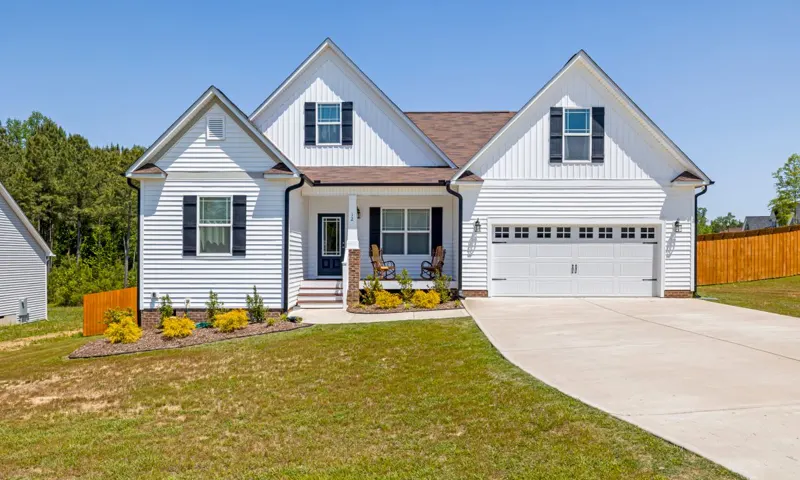
What a driveway replacement involves
Most driveway jobs in older Central LA neighborhoods are replacements, not new pours. The usual sequence is: break out and haul away the old slab, remove roots or soft soil, grade and compact a base, set forms, place reinforcement, pour, finish the surface, cut control joints, and let the concrete cure before you drive on it. Skipping or shortcutting the base and joint steps is a common reason driveways crack early.
Two things make LA driveways different from the national averages you see online. First, many homes have long, narrow driveways running beside the house to a detached garage at the back of the lot, so access for equipment and concrete trucks can be tight. Second, the part between the sidewalk and the street, called the driveway approach or apron, is in the public right-of-way and follows city rules, not just your own choices.
The apron at the curb: City of LA rules
If you only replace the slab on your lot, the apron can stay as it is. If you widen, move or rebuild the apron, City rules apply:
- Width. LAMC 62.105.2 sets the apron at a minimum of 10 feet in single-family and duplex zones (A, RE, RS, R1, R2, RW) and a maximum of 18 feet for lots in A or R zones, measured along the curb. Anything wider needs a deviation approved by the City. (LAMC 62.105.2) (BOE driveway procedure)
- Curb between driveways. At least 20 feet of full-height curb must be kept between driveways serving the same lot. (BOE)
- Utility boxes and street lights. If a water meter, gas shut-off valve box, street light pull box or parking meter sits in the approach, the agency that owns it has to be consulted; concrete is left out around water meter boxes. A driveway can't be built within 5 feet of a street light unless the light is relocated, and street lighting work must be approved and finished by the Bureau of Street Lighting before any concrete is poured. (BOE driveway procedure)
- Busy streets. On an Avenue or Boulevard, BOE needs an approved LADOT Driveway Approach Data Sheet before it issues the A-Permit. (BOE driveway procedure)
So "make my driveway wider at the street" is a permit question first and a concrete question second. Ask any contractor who suggests it how they will get it approved.
Permits for driveways in the City of LA
On your own lot, the LA Municipal Code exempts walks and driveways that are not more than 30 inches above grade and not over a basement from needing a building permit. (LAMC 91.106) That exemption doesn't cover the public right-of-way: work on the approach, curb or sidewalk in front of your home generally needs a Class A-Permit from the Bureau of Engineering. (BOE permit manual) The fee is covered in the cost guide. The owner of a lot is also responsible under LAMC 62.104 for the sidewalk, driveway approach, curb return and curb on or fronting the lot. (LAMC 62.104)
West Hollywood is a separate city with its own permit offices, so City of LA rules don't apply there; see the West Hollywood guide. Historic districts (HPOZs) such as Hancock Park and Miracle Mile can add review for visible exterior changes. (City Planning)
Tree roots under the driveway
Roots that lifted the old slab will lift the new one unless they are dealt with. If they belong to a street tree in the parkway, root pruning needs a permit from StreetsLA's Urban Forestry Division, which inspects first and may ask for a redesign instead. (StreetsLA) If the A-Permit work is what requires the pruning, BOE says the A-Permit comes first, then the street tree permit. (BOE permit manual)
Finish options
- Broom finish: plain gray with a light texture for grip; the most common driveway finish.
- Exposed aggregate: the top layer is washed off to reveal stones, for more grip and texture. (HomeGuide)
- Colored or stamped: patterns and color cost more than a plain finish and need resealing over time (see stamped concrete). (HomeGuide)
What your driveway quote should spell out
- The square footage of the slab and, separately, of the apron and any sidewalk panels.
- Slab thickness and reinforcement, especially if you park a heavy vehicle.
- Breaking out and hauling away the old slab, and what happens if it turns out thicker or reinforced.
- How roots will be handled and who gets the StreetsLA permit if a street tree is involved.
- Who applies for the BOE A-Permit, and whether the fee is in the price.
- Where your cars go while the concrete cures.
The full checklist that applies to any concrete job, plus payment and cancellation rules, is in Before you sign.
Timeline and curing
Concrete takes far longer to cure than asphalt: HomeGuide lists 7 to 30 days for concrete versus 1 to 3 days for asphalt, and says you can usually drive on a new concrete driveway after 7 to 10 days. (HomeGuide) (HomeGuide) Ask your contractor when you can walk on it, when you can park on it, and how to protect it in the first weeks.
How a request works: with your consent it goes to one independent contractor with an active CSLB license, never a list. Free, no obligation. Details.
FAQ
Can I replace just the cracked part of my driveway?
Do I need a permit to replace my driveway in Los Angeles?
How wide can my driveway be at the curb?
Is concrete or asphalt cheaper?
Related projects
- Concrete Patios
- Stamped & Decorative Concrete
- Walkways, Paths & Steps
- Concrete & Sidewalk Repair
- Driveway cost guide
Local guides
Permit offices and local rules differ by neighborhood. Read the guide for your area:
Sources
- LAMC Sec. 62.105.2 Width of driveway approach apron
- LA Bureau of Engineering, Driveway construction, modification or replacement
- LA Bureau of Engineering, General Information on Curbs, Driveways and Sidewalks under Class A Permits (rev. Dec 12, 2022, PDF)
- LAMC Sec. 91.106 Permits (driveways/walks exemption, 91.106.2)
- LA Bureau of Engineering Permit Manual, A-Permit purpose
- LAMC Sec. 62.104 Repairs to sidewalks, driveway approaches, curbs
- LA City Planning, Historic Preservation Overlay Zones
- StreetsLA Urban Forestry, tree root pruning permits
- HomeGuide, Driveway Cost by material (2026)
- HomeGuide, Stamped Concrete Cost (2026)
- HomeGuide, Asphalt vs. Concrete Driveway Cost (2026)
- HomeGuide, Concrete Driveway Cost (page dated June 3, 2025)
Sources checked October 28, 2026. Rules and prices change; confirm with the agency or your contractor before starting work. This page is general information, not legal or permit advice.