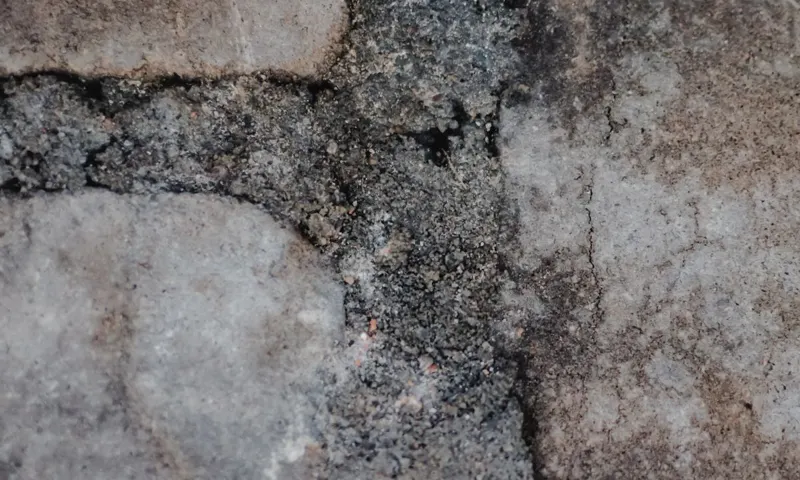
A cracked driveway doesn't always need to be torn out. This guide helps you tell a repair job from a replacement job, explains what a replacement involves and which permits apply where you live, and shows how to check a contractor before you sign.
Repair or replace: the signs
Almost every concrete driveway cracks a little over time. The question is not whether there are cracks, but why they are there and whether they are getting worse.
Usually a repair job:
- Thin, hairline cracks that stay about the same width, especially along the control joints (the straight grooves cut into the slab).
- One or two damaged sections between joints, with the rest of the slab flat and solid.
- Surface wear such as light flaking or stains, where the concrete underneath is still sound.
Usually a replacement job:
- Cracks that keep widening, or slabs that have sunk or tilted so edges stick up and become a trip hazard.
- Many cracks running in different directions across most of the driveway.
- Water that pools on the slab or runs toward the house or garage.
- Roots that have lifted large sections. Patching over roots rarely lasts, because the roots keep growing.
- Repairs on top of old repairs, so the driveway is a patchwork that keeps breaking.
The pattern matters more than any single crack. Widespread movement usually points to a problem under the slab, like a weak base, poor drainage or roots, and a patch on top won't fix that. Only a contractor who sees the driveway in person can tell you which case you have. A good one will explain why, not just quote the bigger job.
What a full replacement involves
A typical replacement follows these steps:
- Break out and haul away the old concrete.
- Fix what is underneath: remove roots or soft soil, then grade and compact a new base.
- Set forms and plan the slope so water drains away from the house and garage.
- Place reinforcement, if the contractor recommends it for your soil and the vehicles you park.
- Pour, finish and cut control joints, so future cracks form in planned lines.
- Cure: keep cars off until the contractor says it is ready.
Many older LA homes have a long, narrow driveway running beside the house to a garage at the back. Tight access for trucks and equipment can change how the job is done, so mention it when you ask for a quote. For a closer look at finishes and the rules for the curb section, see our driveway project page.
Permits: it depends on your city
Your driveway has two parts that follow different rules: the slab on your own lot, and the driveway approach (the apron between the sidewalk and the street), which sits in the public right-of-way.
City of Los Angeles (including most of the San Fernando Valley). The building code exempts driveways not more than 30 inches above grade and not over a basement from a building permit. (LAMC 91.106) Work on the approach, curb or sidewalk generally needs a Class A-Permit from the Bureau of Engineering. (BOE permit manual) Widening or moving the approach brings in width limits and other City rules. (BOE driveway procedure) If a street tree's roots must be cut, StreetsLA's Urban Forestry Division issues that permit. (StreetsLA)
Burbank is a separate city. Its Public Works FAQ says to call the Building Department for a driveway on private property and Public Works for work on the sidewalk, including the driveway approach. (Burbank Public Works) Burbank's list of work that doesn't need a building permit includes driveways not more than 30 inches above grade that are not over a basement and not part of an accessible route. (Burbank)
City of San Fernando issues construction permits for work in the public right-of-way, including driveway approaches, through its Public Works Department. (San Fernando)
Unincorporated LA County areas follow LA County rules; check with LA County Public Works. (LA County) West Hollywood also has its own permit office; see our West Hollywood guide.
Your written contract should say who gets each permit. (CSLB) If a contractor tells you no permit is ever needed, including for the apron, ask them to put that in writing.
How to pick a contractor and check the license
In California, driveway work is normally done by a contractor licensed by the Contractors State License Board (CSLB). The C-8 Concrete classification covers forming, pouring, placing and finishing flat concrete work. (CSLB C-8) A general building (B) contractor can take a concrete-only job only if they also hold the right specialty license or hire a licensed specialty subcontractor. (CSLB)
Before you sign:
- Ask for the license number and look it up yourself with the CSLB license lookup. Check that the license is active and that the name matches the business you are dealing with.
- Be careful with anyone offering to do a full driveway "without a license". CSLB says that work that needs a permit, or where the person hires workers, requires a license no matter how small the job. (CSLB) A full replacement is rarely a small job.
- Get at least two written quotes that describe the same work, so you can compare them fairly.
- Ask about insurance and get any warranty in writing.
Timeline
Every job is different, but the work usually happens in this order: a site visit and written quote, permits if any are needed, demolition and base work, the pour, and then curing time before you can drive on it. Permit review can add time before work starts, especially if the approach is changing. Ask your contractor for a written schedule that covers when demolition starts, when the pour happens, and when you can walk and drive on the new slab. Plan where your cars will park while it cures.
What does it cost?
Price depends on the size, how much has to be broken out, the base, access for trucks, the finish and any permit work. We keep published LA ranges, with sources, in one place: the LA driveway cost guide. For a price for your driveway, a contractor needs to see it.
Questions to ask before you sign
- What is your CSLB license number? Look it up yourself at the CSLB license lookup and check that it is active and covers concrete work.
- What exactly is included? Demolition, haul-off, base preparation, reinforcement, slab thickness, finish, cleanup and any permit should be written into the quote.
- Who pulls the permit, if one is needed? California home improvement contracts must say who obtains permits. (CSLB)
- What is the payment schedule? In California the down payment on a home improvement contract can't be more than $1,000 or 10% of the contract price, whichever is less, and later payments can't run ahead of the work done or materials delivered. (Cal. BPC 7159.5) CSLB notes there are no exceptions to that limit for special-order materials. (CSLB checklist)
- What happens if you find roots, old footings or bad soil? Ask how changes are priced. Changes should be made in a written, signed change order. (CSLB)
- Is there a written warranty? Get any warranty on labor and materials in writing. (CSLB)
You can cancel a home improvement contract in writing within three business days of signing (five business days if you are 65 or older). Don't let work or material orders start inside that window unless you understand the risk. (CSLB checklist)
Before you ask for quotes
A few photos and notes make the first conversation faster: wide shots of the whole driveway, close-ups of the worst cracks, any trees near it, and where water goes when it rains. Write down whether you want the same size and finish or something different, and whether the section at the curb is part of the job.
How a request works: with your consent it goes to one independent contractor with an active CSLB license, never a list. Free, no obligation. Details.
FAQ
Can I just resurface my driveway instead of replacing it?
Do I need a permit to replace my driveway in Los Angeles?
Can I replace only part of my driveway?
How do I check a contractor's license?
Related projects
- Driveway Replacement & New Driveways
- Concrete Patios
- Stamped & Decorative Concrete
- Walkways, Paths & Steps
- Concrete & Sidewalk Repair
- Driveway cost guide
Local guides
Permit offices and local rules differ by neighborhood. Read the guide for your area:
Sources
- LAMC Sec. 91.106 Permits (driveways/walks exemption, 91.106.2)
- LA Bureau of Engineering Permit Manual, A-Permit purpose
- LA Bureau of Engineering, Driveway construction, modification or replacement
- StreetsLA Urban Forestry, tree root pruning permits
- City of Burbank Public Works, Permits FAQs (who to contact to redo a driveway)
- City of Burbank, Building Permits (exempt work list)
- City of San Fernando Public Works, Construction Permits
- LA County Public Works, Building and Safety
- City of West Hollywood, Building & Safety permitting
- CSLB, C-8 Concrete Contractor classification
- CSLB, Get Licensed to Build guide (classifications, PDF)
- CSLB Industry Bulletin 24-07, minor work license exemption (Dec 31, 2024, PDF)
- CSLB license lookup
- CSLB, Learn About Home Improvement Contracts
- California BPC Sec. 7159.5 (down payment limit)
- CSLB, Construction Project Checklist (2025)
Sources checked October 28, 2026. Rules and prices change; confirm with the agency or your contractor before starting work. This page is general information, not legal or permit advice.